
Remember being eight, holding a rope, jumping until your hair stuck to your forehead? Turns out your eight-year-old self knew something. Jumping rope for menopause is one of the best workouts you can pick up in midlife — for your bones, your heart, your mood, and yes, even that sluggish lymph system everyone’s suddenly talking about.
So, why not unleash your inner child and skip your way to better health? With all its health perks, grabbing that jump rope is definitely worth considering in midlife and beyond!
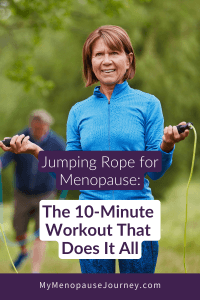
Table of Contents
8 Health Benefits of Jumping Rope for Women Over 50
Jumping rope is a favorite pastime for many, and it’s not hard to see why! This super simple activity is packed with fun and brings a ton of benefits.
Plus, it’s one of the most budget-friendly workouts out there — all you need is a jump rope and a little bit of space! Whether as part of your warm-up or cool-down routine, it’s perfect for breaking a sweat at home.
Here’s what that little rope can do for you:
- Wakes Up Your Lymph System: Your lymphatic system is basically your body’s drainage network — it carries fluid, waste and immune cells around your body. Unlike your blood, it doesn’t have a pump. It only moves when you move. That’s why a sedentary day leaves your ankles puffy and your face looking a bit “blah.” Jumping rope is one of the best things you can do to wake it up. The up-and-down motion squeezes lymph through its little one-way valves, just like rebounding on a mini-trampoline does. Pair it with dry brushing in the morning and you’re giving your lymph a proper wake-up call. Even five minutes can leave you feeling lighter and less puffy. Pretty wild for a piece of plastic, right?
- Glowing Skin: All that bouncing pumps blood (and oxygen) to your skin. You sweat a little, your cheeks flush, and over time your skin looks more alive — not so tired and “winter-grey.” A natural facial, basically.
- Calorie Burner (Yes, Really): If weight loss is on your mind, this is one of the most efficient calorie-burners around. Cleveland Clinic puts it at roughly 100 calories per 10 minutes, depending on how fast you go — about the same as running a brisk mile. Not magic, not overnight, but consistent enough to make a real difference toward your midlife weight goals.
- Coordination and Stronger Bones — Especially After Menopause: This one’s the big one for women in midlife. When estrogen drops, our bones get more fragile — that’s just biology. The good news? Bones respond beautifully to impact — meaning a small thump every time you land. Studies on post-menopausal women show that high-impact moves like jumping rope can help maintain (and in some cases improve) bone density at the hip and lower spine — exactly the spots where fractures hurt most. So you’re not just shedding pounds, you’re also building strength against osteoporosis — and improving your balance and coordination at the same time. Triple win. Pair it with yoga for osteoporosis on rest days and your bones get the full love letter. (Heads up: if you’ve had fractures, joint replacements, or you’re well into postmenopause with low bone density, please check with your doctor before you start jumping. Start gently.)
- Springier Fascia (Yes, This Is a Thing): Fascia is the stretchy spider-web of connective tissue that runs through your whole body — wrapping every muscle, organ and bone. When you’re young and full of estrogen, it’s juicy, slippery and bouncy. Around perimenopause, it can get drier and stickier, which is part of why so many of us suddenly feel stiff and achy for no reason — sore feet in the morning, tight hips, grumpy shoulders. Bouncing movements like jumping rope (and skipping, hopping, even hopscotch) are some of the best things you can do for fascia. They train its springy, elastic bounce — the same quality that makes kids look effortless when they move. A fascia researcher named Robert Schleip has been arguing for years that grown-ups need way more skipping in their lives. He’s not wrong.
- Heart and Lung Power: Each jump is a mini workout for your heart. Just 10 minutes of steady jumping is a serious dose of cardio — Cleveland Clinic compares it to running a moderate-paced mile. Your endurance climbs, your lungs work harder, and over time you feel less out of breath chasing the bus or carrying groceries up stairs.
- Brain Booster: Jumping rope is sneakily good for your brain. The rhythm and timing — eyes watching the rope, hands turning it, feet jumping — light up the parts of your brain that handle coordination and focus. Add the extra blood flow from cardio, and you’ve got a workout that may help with the mental fuzziness so many of us feel in midlife.
- Stress Buster: Feeling anxious or wired? Five minutes of jumping is hard to beat. Cardio releases endorphins (your brain’s feel-good chemicals) and the rhythm itself is weirdly meditative — there’s no room for racing thoughts when you’re concentrating on not tripping. Most women come back from a quick session with their stress noticeably softer around the edges.
So yes — that little rope you used to skip with at recess is doing way more than you’d think. Arms, legs, abs, back, heart, lungs, lymph, fascia, bones, brain — basically your whole body, lit up in five to ten minutes. Hard to find another workout that does this much for free.
Want a visual? Pop “jump rope for women over 50” or “midlife jump rope workout” into YouTube and you’ll find a whole crew of inspiring women in their 50s, 60s and beyond, showing how it’s done. Pick one whose energy you like and follow along.
Tips for a Safer and More Effective Jumping Rope Session — Before, During and After!
Whether you’re a seasoned pro or picking up a rope for the first time, here are some tips to make your jumping rope experience safe, effective, and, of course, super enjoyable!
Before You Jump In: Prep Like a Pro!
- Choose the Right Rope: Step on the middle of the rope with one foot. The handles should reach up to your armpits. Too long and the rope smacks the floor; too short and you’ll be tripping every other jump. Adjustable ropes are the easiest fix.
- Footwear Matters: Wear supportive sneakers — not slippers, not flip-flops, not bare feet on a hard floor. Your knees, ankles and feet will thank you.
- Warm-Up, Warm-Up, Warm-Up: Spend a few minutes warming up — some side lunges, leg swings, ankle circles, or a short walk. Cold muscles plus impact = grumpy joints. Don’t skip this.
During the Jump: Time to Get Bouncy!
- Start Slow: If you’re new (or it’s been 30 years), start with 30 seconds of jumping, then a one-minute breather, then go again. Use those breaks for some deep breathing. Endurance and coordination will catch up faster than you think.
- Mind Your Form: Keep your shoulders relaxed (don’t let them creep up to your ears) and your elbows close to your sides. The movement should come from your wrists, not your whole arms. Land softly, on the balls of your feet — quietly, like you’re trying not to wake anyone downstairs.
- Play with Variations: Once you get the hang of it, switch it up! Try high knees, single foot jumps or even criss-crosses. It’s like a dance party for your heart!
After the Jump: Cool Down Like a Champ!
- Stretch It Out: Your muscles deserve a little love after all that fun! Focus on your calves, quads and hamstrings. A few gentle stretches can help prevent soreness!
- Hydrate, Hydrate, Hydrate: Don’t forget to drink some water. Staying hydrated is key to recovery!
- Celebrate Your Progress: No matter how short or long your jump rope session was, give yourself a high-five. Every bit counts, and you’re doing amazing things for your health!
How often should you jump? Two or three days a week is plenty. According to Cleveland Clinic, daily jumping (or really long sessions) can be hard on your feet, ankles and knees — especially in midlife. So please, no “30 days of jump rope” challenges. Three short sessions a week, mixed with walking, strength training and stretching, is the sweet spot.
Without a doubt, jumping rope can be such a fun and energizing way to add variety to your workouts. And if you want to actually watch someone do it before you try, YouTube is your friend. Search “beginner jump rope tutorial” or “jump rope for women over 50” — there’s no shortage of warm, encouraging women out there showing the ropes (literally).
Picking the Perfect Jump Rope for Your Midlife Workout
Choosing the right jump rope can make all the difference. The good news: jump ropes are cheap and they come in every color and length you can imagine.
If you’re brand new — or returning after a long break — start with a basic PVC or cloth rope. They’re under $15, light, and forgiving while you find your rhythm.
Already comfortable jumping? A speed rope is lightweight and lets you go faster — fun once you’ve got the basics down.
Want more upper-body burn? A weighted rope (extra heft in either the rope or the handles) gives your shoulders and arms a workout while you jump. Cleveland Clinic notes these are usually best once you’ve nailed the basics — not for week one.
Length matters. Stand on the middle of the rope with one foot — the handles should come up to your armpits. Not your shoulders, not your ribs. Adjustable ropes save you the guesswork.
Looking to pair your jump rope with something else? Strength training is the natural partner for impact work — together they’re the most effective combo for midlife bones and muscle. Have a peek at the benefits of strength training during menopause when you’re ready.
References:
6 benefits of jumping rope for your overall health – Cleveland Clinic (health.clevelandclinic.org)
Jumping rope to lose weight – Healthline (www.healthline.com)
Skeletal site-specific effects of jump training on bone mineral density in adults – PubMed (pubmed.ncbi.nlm.nih.gov)
Why jumping rope is the ideal post-menopausal workout for your bones – Hospital for Special Surgery (news.hss.edu)
Fascia as a regulatory system in health and disease – PubMed Central (pmc.ncbi.nlm.nih.gov)
Hormone receptor expression in human fascial tissue – PubMed Central (pmc.ncbi.nlm.nih.gov)
Lymphatic system and exercise – Cleveland Clinic (my.clevelandclinic.org)
Bone density test – Cleveland Clinic (my.clevelandclinic.org)

Written by Gita — Certified Fasting Therapist, Nutrition Coach and Keto Coach, and founder of My Menopause Journey since 2014. Every article is built on published research and trusted health sources, updated regularly, and shaped by her own journey through menopause. Read more about Gita and her credentials.
