It’s Friday night. The dishes are done, you’re finally on the sofa, and he gives you that look. And a little voice inside you sighs: not tonight. You’re tired. And if you’re honest, the last time it stung a bit down there, so you’ve been dodging ever since. Sound familiar? Come sit with me for a minute. We’ll get to natural lubricants, I promise — but first, the heart part.
First, the thing I wish someone had told me sooner: it’s completely normal for two people to want sex at different times and in different amounts. I recently read a whole book about desire, and that was the part that made me exhale. Different levels of desire don’t mean something is broken between you. It’s just two different people in one bed.
What helps is building the “us” feeling, little by little, every day. A real hug in the hallway when one of you comes home. A hand on his back as you pass in the kitchen. Holding hands on a walk. A sweet text in the middle of the day. Saying thank you, and meaning it. Being here and now with each other, instead of just side by side. Tiny things. But they build that feeling of we have something special, and desire grows from there.
Now, I know what a lot of us think: “If I hug him, he’ll want more — so I’d better not.” And so we hold back on the very touch we long for. That’s exactly what date night solves. My husband and I have started something new: a date night, the same night every week. And it works so well. Because sex has its own evening, the rest of the week can be loving with no strings attached. Nobody has to guess, nobody feels pressured, and nobody ends up feeling let down. When I know tonight is our night, I can plan for it. If my day has been busy, I rest a little extra in the afternoon, so I’m not running on empty when the evening comes. (I share more about our date nights in my piece on relationship changes in perimenopause.)
I know, planned sex sounds about as sexy as a dentist appointment. But relationship therapist Esther Perel says that in a long relationship, desire rarely just shows up on its own. It grows when you make room for it, on purpose. She also says desire needs a little air: we often feel most drawn to our partner when we see them in their element, fully themselves. So notice him when he’s doing his thing — and let him see you doing yours.
And then there’s the body. Because your heart can be all in while your vagina says “ouch.” Low estrogen makes everything drier and more fragile down there. That’s exactly where natural lubricants, vaginal moisturizers and a few gentle helpers come in. They don’t do the relationship part for you. But they take the pain out of the picture, so the closeness can come back.
You don’t have to live with vaginal dryness. Below, I’ll show you what I use, what I skip, and how to read a label so you pick the one that’s kind to you.
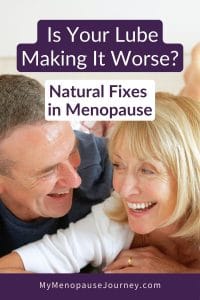
Table of Contents
Why Do We Need Lubes for Vaginal Dryness?
Naturally, your vagina becomes lubricated. This natural lubrication makes sex more enjoyable and pleasurable because it reduces friction and irritation! However, many women in midlife (including me) experience vaginal dryness, especially in post-menopause.
At this time of our life, it seems like the vagina does not lubricate enough. Due to the absence of natural lubrication, the vaginal area becomes dry and more fragile!
Low estrogen levels, which is common during post-menopause, can manifest as discomfort during intercourse. Sometimes, it also leads to pain and eventually results in low libido! In some cases, women would even experience pain, burns or itch while walking or sitting.
Doctors have a name for this: genitourinary syndrome of menopause, or GSM (a fancy way of saying “dryness down there, plus a touchier bladder”). Around half of us get it after menopause. And here’s the thing nobody tells you: unlike hot flashes, it doesn’t fade on its own. It tends to creep along unless you care for it. My vaginal dryness guide explains what’s going on inside.
For that reason, we need more lubrication than our body naturally provides. In these circumstances, who do we call? LUBES FOR VAGINAL DRYNESS!
The Importance of Hormonal Balance for Sex
There is a reason why estrogen, progesterone and testosterone are called “the sex hormones”.
Among other functions, they all work together to maintain every organ’s health in our reproductive system! These hormones help by:
- Increasing blood supply
- Strengthening the walls
- Maintaining pH balance
- Keeping moisture in the vaginal area
- Activating arousal and natural lubrication during sex
Without these things, sex becomes less pleasurable! Low libido can hit you if you have vaginal dryness. I mean, who wants painful sex, right?! Isn’t it supposed to be fun?
Well, I personally had big problems with this. My husband thought he did not do things right! He blamed himself for not getting me “wet”. Many women I talk to almost feel like they could live without sex. But for me, once you take sex out of the picture, you are also erasing pleasure, intimacy and connection. That’s why sex is IMPORTANT to me.
The oxytocin that comes with it is such a valuable hormone!
In fact, it is called “the love hormone” as it produces a sweet, feel-good effect! It also helps calm “cortisol” — the stress hormone.
If you are intrigued by other natural ways to balance your hormones in menopause, I’ve gathered my favorites here!
Natural Lubricants versus Chemical-Based Lubricants
A lubricant is a liquid or gel that women and their partners can use during sex. It helps to make the vulva and vaginal area wetter and moist. Lubricants have long been recommended by gynecologists and sex experts to effectively help couples with sex-related problems.
Nowadays, there are so many lubes for vaginal dryness available in the market. Many of the products contain a lot of ingredients and can be full of chemicals! I myself stay away from these. Always remember that what you put on your skin transfers inside your body.
The simple rule: If it’s safe to eat, it’s also safe to use. Well — almost. Honey and sugar are perfectly edible, and they’re also a yeast’s favorite snack. So keep it plain: one or two pure ingredients, nothing sweet, nothing scented.
You also have the option to make it yourself! The simplest DIY is pure aloe vera gel (check that it has no alcohol) or a plain, unrefined plant oil. Homemade mixes have no preservatives, though, so make small batches and toss them after a week. YouTube has many free videos that can help.
What to Look for on the Label
“Natural” on the front of the bottle means very little. The back is where the truth lives. Here’s my quick checklist:
- Osmolality. Big word, simple idea: how “thirsty” a lube is. A very concentrated lube pulls water out of the delicate skin down there, so it can sting and leave you even drier. The World Health Organization advises lubes stay under 1,200 mOsm/kg, and ideally much lower. Good brands print this number. If they don’t, an email will usually get it.
- pH. A healthy vagina is slightly acidic, around 3.8 to 4.5. A lube close to that range helps your good bacteria feel at home.
- Glycerin near the top of the list. A little is fine. A lot pushes the osmolality up, and some women find it feeds yeast.
- Parabens, fragrance, “warming” or “tingling”. Skip them. Your skin is thinner now, and these are the usual troublemakers.
- Patch test first. Dab a little on your inner arm, then on the outer vulva, and wait a day. If it itches or burns, it’s not your lube.
Cut your worries, because I will share with you more of the top, natural, gynecologist-recommended lubes to make sure that you know the safest options to go for!
Top Natural Lubricants
These lubes are my top-choice, and coconut oil is my favorite! They are clean, natural products I can use often, which are good for my partner and me. There are also lubes made from natural ingredients such as aloe vera, water, pure flaxseed or chia extract, seaweed — GO FOR THEM.
A few honest notes on coconut oil, because I love it but I won’t oversell it. A small 2023 study found that virgin coconut oil eased dryness and painful sex, which matches what I feel. But oils break down latex condoms, so don’t mix the two. And if you’re prone to yeast infections, oils may not be your friend. A water- or aloe-based natural lubricant is the safer pick for you.
Vegan lubes are also super great to use! These are aloe-based lubes with plant cellulose and added vitamins.
Watch out for gluten, petroleum, paraben, lots of glycerin or fragrance. Remember that natural lubricants are free from chemicals that may cause itch or skin irritation! And that’s the best thing about natural lubricants — they don’t have any of these!
One thing I’ve changed my mind on: silicone. It isn’t “natural”, but a pure, medical-grade silicone lube is very gentle. It isn’t absorbed, so a little lasts a long time, and many menopause doctors suggest it. If natural options dry up too fast for you, it’s a good backup. Just keep it away from silicone toys, because it can damage them.
Water-Based Lubricants
Water-based lubes hold the golden crown for increasing pleasure and satisfaction during sex! This type of lubricant has the following superpowers:
- Does not damage latex condoms.
- Will less likely cause vaginal discomfort compared to oil-based lubricants.
- Non-staining and can wash off easily with soap and water.
Awesome, right?! Some women report that water-based lubricants can dry up quickly though, so you may have to reapply.
Also, some of these lubricants contain preservatives and additives such as glycerin and parabens. In large amounts, glycerin can irritate sensitive tissue and may feed yeast. Parabens may also disrupt the normal function of hormone systems. Since they are known as hormone-mimicking chemicals, the body may treat paraben as a hormone.
According to Dr. Kecia Gaither, some women have experienced heightened sensations and better orgasms using CBD lube!
CBD lubes are also said to be effective in decreasing inflammation and increasing blood flow. It can also help with muscle relaxation, making CBD-infused lubricants a reliable option for women who have pain during intercourse. To be honest, the research is still thin, and the rules on CBD differ from country to country. So check what’s allowed where you live, and patch test first.
Vaginal Moisturizers
While lubricants are designed to make the vaginal surfaces slide with ease and comfort, moisturizers work by adding or “sealing in” moisture to fight vaginal dryness!
Vaginal moisturizers come in gel or creams. They can help prevent general itching and irritation. Still, they may not provide enough wetness to avoid discomfort during penetration. That’s because moisturizers, unlike lubricants, are absorbed by the skin. They need to be used regularly to ease dryness.
Many women go for these products because of not only “allowing” them to have sex again, but to “feel pleasure” again! Vaginal moisturizers work to rejuvenate, repair, soothe and even tighten. They can provide relief from vaginal dryness, redness, itching, burning and general discomfort caused by chemical irritants, intimate activity, hormone changes and menopause.
Yup, they may contain chemicals. But there are available vaginal moisturizers free of parabens, mineral oil, petroleum or animal by-products!
Look for one with hyaluronic acid. It’s the same water-holding molecule you know from face serums, and your vagina loves it too. In a small 2024 trial, a hyaluronic acid gel eased dryness about as well as low-dose vaginal estrogen. The trick is rhythm: use it two or three times a week, sex or no sex — like a night cream for down there.
Help From the Inside Out
Lubes and moisturizers work on the outside. But I always look at the whole body, too, because your vagina is part of it.
- Sea buckthorn oil. In a Finnish study, women who took sea buckthorn oil capsules for three months had healthier vaginal tissue than women on a placebo. It’s a gentle effect, not magic, but I like it.
- Good fats and water. Omega-3 fats and enough water help all your moist tissues — eyes, skin and yes, down there.
- Blood flow. A strong pelvic floor brings more blood to the area. My pelvic floor exercises take five minutes a day.
- Slow down. Arousal IS lubrication. Give yourself time to warm up. It’s not a luxury now, it’s part of the recipe.
Estrogen-Based Solutions
As you go through menopause, you will experience a dramatic shift in your hormones — affecting your vaginal health. The low hormone levels can cause unpleasant symptoms, such as vaginal dryness, itching, burning and pain during sex!
Estrogen-based solutions work by replacing lost estrogen. They can potentially reverse some effects of menopause too and even other medical conditions, such as urinary incontinence and urinary tract infection. For dryness, the low-dose vaginal kind is the one doctors reach for. The dose is tiny and mostly stays where you put it. In November 2025, the FDA removed the old boxed warning from these products. It’s a prescription in the US. In the UK, a pharmacist can sell low-dose vaginal tablets without one. Here are the main types:
Vaginal Estrogen Cream
A small amount goes inside the vagina with an applicator, or onto the vulva with a fingertip. Usually it’s daily for two weeks, then twice a week. It can also soothe the outer skin that rubs and burns.
Vaginal Estrogen Tablets
Tiny tablets or soft inserts that you slip in with an applicator. They melt with your body heat. Less mess than cream, and many women find them the easiest to stick with.
Vaginal DHEA
DHEA, or “dehydroepiandrosterone”, is a hormone that helps produce androgen and estrogen. As estrogen levels naturally decrease, DHEA continues to be a source of estrogen and androgen in your body! Vaginal DHEA inserts (prasterone) are FDA-approved for painful sex after menopause. The cells down there turn DHEA into just the hormones they need.
Vaginal Ring
A vaginal ring is a small, soft, plastic ring you place inside your vagina. It steadily releases a low dose of estrogen for three months at a time. Put it in, forget about it. (Don’t mix it up with the birth-control ring, which is a different product.)
Whichever type you pick, talk it over with your gynecologist. And a bonus many women don’t know: vaginal estrogen also helps keep bladder infections away.
Estrogen patches, gels and sprays are a different thing: whole-body hormone therapy, mainly for hot flashes and sleep. I explain them in my hormone therapy guide.
“I’m too tired all the time! What more would staying sexually active do me in this age, other than feeling good for a moment?”
Oh, I hear you. I used to think the same. Then menopause taught me something: sex isn’t just about the fun part. It’s how we stay close.
Did you know that its benefits may even increase as we get older?
A study conducted in 2010 showed that staying sexually active was positively associated with better health quality in middle age and later life. This means that you don’t only get to maintain a strong bond and intimate relationship with your partner — you also improve your overall health together! If you ask me, that’s absolutely hitting two birds with one stone!
Sex is good for your mind, too. It’s one of the simplest ways to feel happy, and some studies link a regular sex life in later years with a sharper memory. If you’re in perimenopause and your moods are riding a rollercoaster, closeness can be a soft place to land. And after menopause, when life is calmer but still full, it’s a lovely way to stay connected and light. Regular sex may even help ease anxiety and low moods.
It also gives you a little boost of oxytocin, that “love hormone” again, which may help your body handle stress. Some small studies even link it to calmer blood pressure. And to top it all off, sex releases endorphins, your body’s own natural painkillers. Isn’t it wonderful that one of the nicest ways to ease the aches and pains that come with age is also one of the most fun?
Menopause is a time to bloom, lovely woman!
You are now empowered with a lot of ways to put an end to your sexual dryness. It’s never too late to ignite your passion for a vibrant life! And if you want to see which other symptoms might be part of the same picture, grab my free 5-Minute Menopause Map.
One more thing, from one woman to another: some signs need a doctor, not a lube. Bleeding after menopause, sores, pain that doesn’t ease, or itching with an unusual discharge or smell — get these checked. The NHS has a clear page on when to seek help for vaginal dryness.
Quick Check: Which Helper Do YOU Need?
Your body leaves clues. Find yours:
Dry only during sex? A natural lubricant is your friend. Start with aloe or a gentle water-based one.
Dry, itchy or tight all day long? Add a hyaluronic acid moisturizer two or three times a week.
Your lube stings or leaves you drier? Check the label for lots of glycerin and the osmolality number, and switch.
Burning when you pee, or bladder infections that keep coming back? Ask your doctor about low-dose vaginal estrogen.
Itching with discharge or a new smell? That may be yeast or a bacterial imbalance. Get it checked before you try anything new.
Keep notes for two weeks in your journal. You’ll see your pattern fast.
FAQs About Natural Lubricants
What is the best natural lubricant for menopause dryness?
There’s no single best one. For many women, pure aloe vera gel or an aloe-based lube is the gentlest start. Coconut oil is lovely if you don’t use condoms and aren’t prone to yeast. If natural lubricants dry up too fast, a pure silicone lube is a kind backup.
Is coconut oil safe to use as a lube?
For many women, yes. Pick virgin, unrefined coconut oil and patch test first. Skip it with latex condoms (oil weakens them) and if you get yeast infections often.
What’s the difference between a lubricant and a vaginal moisturizer?
A lubricant is for the moment: it makes sex slide easily, then it’s gone. A moisturizer is for every day: you use it a few times a week, and it keeps the tissue softer over time. Many women do best with both.
Is vaginal estrogen safe?
Low-dose vaginal estrogen stays mostly local, and very little reaches the rest of your body. That’s why the FDA removed its old boxed warning in 2025. If you’ve had breast cancer, talk it through with your cancer doctor first.
References:
What is a lubricant? – ISSM (www.issm.info)
The 2020 genitourinary syndrome of menopause position statement of The North American Menopause Society – Menopause (pubmed.ncbi.nlm.nih.gov)
Genitourinary Syndrome of Menopause: AUA/SUFU/AUGS Guideline (2025) – American Urological Association (www.auanet.org)
Hormonal Treatments and Vaginal Moisturizers for Genitourinary Syndrome of Menopause: A Systematic Review – Annals of Internal Medicine (www.acpjournals.org)
A randomized, pilot trial comparing vaginal hyaluronic acid to vaginal estrogen for the treatment of genitourinary syndrome of menopause – Menopause (journals.lww.com)
Use and procurement of additional lubricants for male and female condoms: WHO/UNFPA/FHI360 advisory note – WHO (www.who.int)
Characterization of commercially available vaginal lubricants: a safety perspective – PMC (pmc.ncbi.nlm.nih.gov)
Clinical and personal lubricants impact growth of vaginal Lactobacillus species and colonization of vaginal epithelial cells: an in vitro study – PMC (pmc.ncbi.nlm.nih.gov)
Virgin coconut oil in paste form as treatment for dyspareunia and vaginal dryness: a pilot study – PubMed (pubmed.ncbi.nlm.nih.gov)
Effects of sea buckthorn oil intake on vaginal atrophy in postmenopausal women: a randomized, double-blind, placebo-controlled study – Maturitas (pubmed.ncbi.nlm.nih.gov)
HHS removes misleading FDA warnings on hormone replacement therapy – FDA (www.fda.gov)
Vaginal dryness – NHS (www.nhs.uk)
Sex, health, and years of sexually active life gained due to good health – BMJ (pmc.ncbi.nlm.nih.gov)
Urinary incontinence – Mayo Clinic (www.mayoclinic.org)
Urinary tract infection – Mayo Clinic (www.mayoclinic.org)
Vaginal ring – NHS (www.nhs.uk)
Parabens – EWG (www.ewg.org)

Written by Gita — Certified Fasting Therapist, Nutrition Coach and Keto Coach, and founder of My Menopause Journey since 2014. Every article is built on published research and trusted health sources, updated regularly, and shaped by her own journey through menopause. Read more about Gita and her credentials.