Food combining for menopause might sound like another diet trend — but it’s not.
You don’t need another perfect diet. What you really need in midlife is to feel better in your body.
Not bloated after meals. Not dragging through your days.
Not staring at the scale wondering what happened overnight.
That’s where food combining comes in. It isn’t a magic pill (none of those work anyway). It’s a simple strategy that helped me reboot my digestion, feel lighter, and finally make food feel like a friend again.
Food Combining Benefits in Menopause
Food combining for menopause means eating foods in combinations your gut can digest easily. Benefits include:
- Less bloating and gas
- Easier weight management
- Better energy and nutrient absorption
- More stable blood sugar and hormones
- Calmer digestion and less inflammation
Food combining isn’t a rigid diet — it’s a gentle shift that helps your body feel lighter, calmer, and more balanced in midlife.
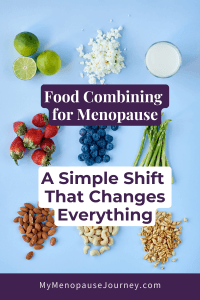
Table of Contents
What Is Food Combining?
At its core, food combining is about understanding how different foods digest — their speed, their enzymes and the environment they need (acidic or alkaline).
Think of your stomach as a production line.
If a slow-moving protein hits the conveyor belt at the same time as a fast-carb fruit, chaos happens. Fermentation. Bloating. Fatigue (due to the inefficient absorption of nutrients).
So, to avoid that, you eat foods in combinations that your gut can handle, such as:
- Proteins with non-starchy veggies
- Starches with healthy fats and starchy veggies
- Leafy greens with nearly everything
- Fruits on their own — always
It sounds simple. And yes, it IS simple!
But the best part is… it gives your gut the gentle structure it needs in midlife — to digest and absorb nutrients better!
Why Food Combining Makes Sense in Menopause
Our hormones are shifting so much at this phase of life. Estrogen, progesterone, insulin, cortisol, thyroid — they all get tangled in the shuffle of menopause.
And guess what gets hit hard?
Digestion.
Your once “normal” meals now leave you bloated, gassy or just… off.
Food combining isn’t a trendy detox or a rigid plan.
It’s more like a digestive dance — pairing foods in a way your body can actually handle.
When you eat the right combos at the right time, digestion flows, inflammation cools down and even symptoms (like brain fog and stubborn belly weight) begin to shift!
The Benefits of Food Combining in Midlife
Let’s get specific. Here’s how this eating approach can support you during menopause:
1. It Eases Digestive Overload.
Sluggish digestion is a major complaint in perimenopause and beyond.
Food combining lightens the load — no more digestive traffic jams!
2. It Helps with Bloating and Belly Weight.
Wrong combos = fermentation = bloating.
Right combos = smoother digestion and less inflammation.
Over time, it can help with weight that won’t budge!
3. It Supports Hormone Balance.
Balanced blood sugar means more stable insulin levels.
Leafy greens and healthy fats support estrogen metabolism and boosts hormone production.
Gut-friendly combos reduce cortisol spikes.
Yup, they are all connected!
4. It Boosts Energy Levels.
When digestion isn’t hogging all your energy, you’ll actually have some left. Who knew, right?
But other than that, optimal digestion means better digestion of the nutrients you get from food. This means more stable energy all day. Because sometimes, the problem isn’t in the food we eat — it’s in the condition of our gut!

Food Combining Basics: What to Know Before You Start
- Here’s a quick cheat sheet from my own notes (and years of testing this out myself):
PROTEIN
- Takes the longest to digest (3+ hours)
- Needs acidic enzymes
- Pair with leafy greens, non-starchy veg
- Avoid with starches, processed fats
FATS
- Gets digested in 2–3 hours
- Needs alkaline environment
- Pair with starches, veg, leafy greens
- Best sources: avocado, olives, seeds, nuts
FRUITS
- Gets digested in 30 minutes
- Best eaten alone (yes, even bananas!)
- Watch out for: dried fruits and smoothies after meals
VEGETABLES
- For non-starchy (like cucumber, cabbage, spinach): go with anything
- For starchy (like sweet potato, corn): pair with fats or other starches
- For leafy greens: combine with everything. Your gut loves them.
What to Combine — and What to Skip
One of the easiest ways to practice food combining for menopause is to start with the basics: some pairings are gut-friendly, while others slow digestion and trigger bloat. Here are a few examples I use myself:
✅ Great Combos (your gut will thank you)
→ Salmon + broccoli + leafy greens
Protein and non-starchy veggies digest well together. The greens add fiber that keeps things moving smoothly.
→ Quinoa + avocado + roasted squash
A starch paired with a healthy fat makes for steady energy without the sugar crash.
→ Chicken + sautéed zucchini + leafy salad
Light protein with water-rich veggies keeps digestion flowing and prevents that “heavy belly” feeling.
→ Green smoothie (alone or with soaked nuts)
Fruit digests super-fast — so having it on its own (or blended with soaked nuts for extra staying power) prevents fermentation and gas.
❎ Combos to Skip (your gut gets stuck here)
→ Beef + bread
Protein + starch is a tough duo. They need opposite enzymes, so they often sit heavy and ferment.
→ Fruit after meals
Since fruit digests in about 30 minutes, it’ll ferment if you pile it on top of a slower meal — hello bloating and gas.
→ Milk + meat
Both demand different digestive processes, making your gut work overtime and leaving you sluggish.
→ Liquids during meals
Chugging water (or wine!) with food dilutes stomach acid, slowing down digestion. Sip before or after instead.
It’s not about being perfect — it’s about giving your gut fewer traffic jams and more smooth rides.
How to Start Food Combining in Midlife
Start slow. You don’t have to re-learn everything overnight!
Try one swap per day — or just follow the 80/20 food combining rule:
→ 80% of the time: eat any of the smart food combinations
→ 20% of the time: relax, don’t overthink it, live your life!
Here are more tips that made it easier for me…
- Aim for 80% vegetables on your plate.
- Soak your nuts – seriously. Becomes a lot easier to digest!
- Don’t eat until stuffed – stop when you feel full.
- Sequence your meals – protein and healthy fats first, carbs and fruits later.
- Eat on time – your body loves rhythm.
- Create a food rhythm, not a diet – it’s about flow, not rules.
- Spice it up – ginger, turmeric, garlic… digestion’s best friends!
- Use apple cider vinegar (ACV) or lemon water before meals – this primes your gut.
But… Does Food Combining Really Work?
I get this question all the time. And honestly, as a Nutrition Coach, I’d say yes — for me and many midlife women I’ve worked with.
The science world is still catching up, but traditional medicine (like Ayurveda and Chinese Medicine) has known this for centuries.
It might not be the fix-all, but it’s one of the simplest shifts that can make you feel… more like you again!
Our body’s digestion department in midlife isn’t broken — it just needs a new kind of support.
When you give your body the right nutrients in the right conditions, you stop fighting against food and start flowing with it!
So, whether you try this out for one meal or go all in, remember:
Food isn’t just fuel — it’s information.
And your body? She’s always listening.
FAQ: Food Combining for Menopause
What is food combining for menopause?
Food combining is an eating approach where you pair foods based on how they digest. The goal is to avoid “traffic jams” in your gut. For midlife women, it can ease bloating, improve energy, and help with weight that feels stuck.
What are the benefits of food combining in menopause?
The top food combining benefits include lighter digestion, reduced bloating, more stable blood sugar, better nutrient absorption, calmer hormones, and steady energy throughout the day.
Can food combining help with weight loss in menopause?
Yes — indirectly. By reducing bloating, balancing blood sugar, and improving digestion, food combining for menopause can help your body use fuel more efficiently, which often makes it easier to release stubborn midlife weight.
Which foods should not be combined?
Some tricky combos include protein with starch (like beef and bread), fruit after meals, or drinking lots of liquid during meals. These slow digestion and often lead to bloating.
Is food combining a diet or lifestyle?
It’s not a strict diet. Think of it as a digestive rhythm — gentle guidelines that make food easier on your gut. Even following it 80% of the time can make a noticeable difference.
References:
ancientnutrition.com/blogs/all/food-combining?srsltid=AfmBOopET-WREK4O0wU8hLx6NNvRjzcXtUo8g42f9zqWC11pWd4pBNty
pmc.ncbi.nlm.nih.gov/articles/PMC8866489/
researchgate.net/publication/360577289_FOCUS_ON_FOOD_COMBINING
pmc.ncbi.nlm.nih.gov/articles/PMC7551485/

Written by Gita — Certified Fasting Therapist, Nutrition Coach and Keto Coach, and founder of My Menopause Journey since 2014. Every article is built on published research and trusted health sources, updated regularly, and shaped by her own journey through menopause. Read more about Gita and her credentials.