

Let’s get real: midlife has a funny way of reminding us that our bodies need a little extra TLC. Joints start creaking, energy dips, and suddenly a short flight of stairs feels like a minor obstacle course.
But here’s the good news: walking is one of the simplest, most effective tools for midlife wellness.
No fancy equipment, no intimidating gym membership — just a good pair of shoes and a willingness to move.
Yes, walking might sound basic. But the benefits of walking go way beyond counting steps or getting a little fresh air. So let me show you what those steps are really doing for you.
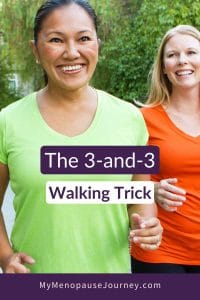
Table of Contents
Walking Health Benefits: Why Walking Is More Powerful Than You Think
You might be thinking, “It’s just walking… how much good can it really do?”
A lot, actually. Here’s the thing — done regularly, a walk quietly supports so much of how you feel in midlife. Like:
- Heart health: Walking strengthens your heart, lowers blood pressure, and improves circulation. (Yes, walking can count as cardio — the gentle kind!)
- Bone and joint support: Gentle, weight-bearing movement while walking keeps your bones denser and your joints lubricated.
- Mood booster: Stepping outside can ease stress, anxiety, and low energy — perfect for your mental health in midlife.
- Weight management: Consistent walking helps maintain your metabolism and manage your body composition as hormones shift.
- Brain health: Walking helps your focus, your memory, and — yes — your creativity. Ever had your best idea halfway around the block? That’s your brain on a walk.
Basically, it’s a full-body tune-up disguised as a casual stroll! Isn’t that amazing?
Is Walking Cardio? (Short Answer: Yes… and No)
Walking is technically cardiovascular exercise, especially if you aim for a brisk pace. You don’t need to run marathons or master HIIT to get your heart pumping.
Moderate-intensity walking — where you can talk but feel slightly breathless — is enough to:
- Improve cardiovascular endurance
- Burn calories and manage midlife weight changes
- Reduce risk of chronic conditions like diabetes, heart disease, and stroke.
So yes, walking counts as cardio, and yes, your body notices — even if you’re not breaking a sweat to Beyoncé tunes!
Walking Tips for Women in Midlife
The secret to sticking with a flexible walking routine? Making it easy, enjoyable, and sustainable. Here are some expert-backed walking tips for women:
Start Small and Build Gradually
Don’t stress about 10,000 steps on day one. Even 15–20 minutes a few times a week is enough to start feeling benefits.
Use Proper Shoes
Supportive footwear prevents joint strain and keeps walking enjoyable — plus, it saves your knees and hips.
Or Don’t Use Shoes at All! (Grounding Matters)
If you’re on a soft surface like grass, sand, or dirt, walking barefoot — aka “grounding” — can connect you to the earth, stimulate your feet’s muscles, and help with balance. Just take it slow if you’re new to it, and watch out for rocks!
Mix It Up with Outdoor Walking
Speaking of the outdoors… fresh air, sunlight, a bit of green? Getting your walk outside lifts your mood, tops up your vitamin D, and wakes up your energy.
Try “Japanese Walking” (the 3-and-3 trick)
You’ve probably seen this one floating around on social lately. It’s called Japanese walking, and it’s wonderfully simple: walk briskly for 3 minutes, then easy for 3 minutes — then repeat, about five times, for a 30-minute walk. Aim for four days a week if you can.
The “brisk” stretch should feel like you can still talk, but you wouldn’t want to sing. The “easy” stretch is your breather.
And it’s not some trend someone made up last week. Researchers in Japan (at Shinshu University) studied this back in 2007 on women and men around 60 — and the interval walkers came out ahead on blood pressure, leg strength, and fitness compared to the steady-pace strollers. Not bad for just changing your speed now and then!
No fancy tracker needed — your phone timer and a little willingness to push, then ease off, does it.
Include Mindful Movement
Use your walk to clear your head, practice deep breathing, or even meditate while moving. Midlife stress doesn’t stand a chance.
Creative Ways to Make Walking Fun
Walking doesn’t have to be boring or solitary:
- Schedule walking dates with friends or your dog
- Explore new neighborhoods, parks, or hiking trails
- Listen to educational podcasts or music that energizes you
- Track steps or join a friendly walking challenge
Making it enjoyable increases the chance you’ll stick with it long-term — and that’s when the real benefits of walking start stacking up!
Small Steps, Big Results
Consistency matters more than speed or distance. Bottom line: a regular walk — even a gentle, moderate one — can:
- Reduce the risk of heart disease by up to 31%
- Lower risk of type 2 diabetes by up to 30%
- Improve balance, flexibility, and mobility in midlife women
- Support mental health and stress management
A daily walk is like a low-key superpower for your body and mind!
The Takeaway
Here’s the takeaway: flexibility, mood, heart health, and joint support — all improve with regular walking.
Midlife is the perfect time to fall for walking because it’s low-impact, accessible, and surprisingly powerful.
And if the weight side of midlife is what’s nagging at you, my free guide How I Got My Waist Back walks you through the smart-fasting-plus-protein piece that pairs beautifully with a daily walk.
The best part? All you need is a good pair of shoes, a willingness to move, and maybe a little sass to remind yourself: “I’ve got this… one step at a time.”
So, lace up. Step out. And enjoy all the benefits of walking waiting for you!
References:
Effects of high-intensity interval walking training on fitness and blood pressure – Mayo Clinic Proceedings (pubmed.ncbi.nlm.nih.gov)
Interval walking: the “Japanese walking method” – Brown University Health (brownhealth.org)
Walking and cardiovascular disease risk – American Heart Association journals (ahajournals.org)
Walking pace and type 2 diabetes risk – British Journal of Sports Medicine (bjsm.bmj.com)
12 benefits of walking – Arthritis Foundation (arthritis.org)
Walking for muscle and bone health – Mayo Clinic (mayoclinic.org)
Walking: how many steps, how fast – Mayo Clinic (mayoclinic.org)

Written by Gita — Certified Fasting Therapist, Nutrition Coach and Keto Coach, and founder of My Menopause Journey since 2014. Every article is built on published research and trusted health sources, updated regularly, and shaped by her own journey through menopause. Read more about Gita and her credentials.
