You’re sitting in a coffee shop, or just relaxing on the sofa, when out of nowhere your chest goes tight, your heart starts pounding and a wave of dread rolls in. Sound familiar? A panic attack in midlife can hit when we least expect it, right on top of work, family, relationships and trying to look after ourselves.
Trust me, this happens to so many of us. And the good news? Your body can learn to calm down again.
So, what can we do?
Let’s take that deep breath together and look at what actually calms your system down. Midlife might be messy, but it can also be a time for learning, healing and finding peace from within. Let’s figure this out together!
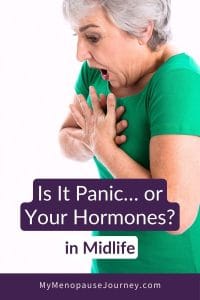
Table of Contents
What Does a Panic Attack Feel Like?
Panic attacks are sudden and overwhelming feelings of fear and anxiety. It can cause physical, emotional and psychological symptoms — such as heart palpitations, excessive sweating, shaking or trembling, chest pains, dizziness, confusion, nausea, numbness and chills.
Experiencing a panic attack during midlife often starts with a sudden rush of anxiety that grips you unexpectedly. It leaves you feeling trapped in a whirlwind of emotions!
Your heart races, pounding like a drum. Your breath shortens and feels constricted — as if there’s a weight pressing on your chest. You might find yourself feeling dizzy or lightheaded, as if the ground beneath you is shifting. The suddenness also tends to add a sense of dread and confusion, as your mind wonders what might be happening to you.
Feels like a scene from a horror movie — I know!
But before I make you feel panicky from the thought of a panic attack, let me assure you that it can be managed and prevented! (I’ve got great hacks and solutions to share further down!)
One quick but important note: panic and heart trouble can feel alike. If you have chest pain, can’t catch your breath or feel like you might faint, call 911 right away. And if something just feels wrong, get checked. That’s never an overreaction.
Also, it is important to note that panic attacks are different from anxiety attacks.
→ A panic attack comes on fast, often out of the blue, and peaks within about ten minutes. It’s intense, very physical, and it passes.
→ In menopause, swinging hormones can make panic attacks feel more random and more frequent, because the trigger is inside you, not in the room.
On the other hand, an anxiety attack usually has a gradual onset. Also, other symptoms of anxiety usually precede the episode. Unlike panic attacks, an anxiety attack is usually caused by something that can be pinpointed.
What Causes Panic Attacks in Menopause?
Panic attacks in menopause are usually triggered by fluctuating estrogen and progesterone levels. These hormones are known to work together for mood regulation. So, declining levels can make us more susceptible to stress, anxiety, depression, brain fog, sleep problems and fatigue! These can all escalate into panic attacks, especially when emotions get too overwhelming.
For some women, menopause symptoms, like hot flashes, night sweats and weight problems, may also trigger social anxiety and contribute to panic attacks. A hot flash can even feel like the start of a panic attack: sudden heat, a racing heart, that “uh-oh” feeling. In the big Women’s Health Initiative study, about 1 in 10 postmenopausal women had a full panic attack within six months, and it was more common in women with hot flashes. Undoubtedly, hormonal imbalances and the symptoms they cause are truly at the root of panic attacks in menopause!
Not to mention that as we age, we also experience major life changes — such as children leaving home or parents becoming older. Without taking some time to pause and process these life transitions, they can cause emotional distress and result in panic attacks.
Then there’s the stress loop. Cortisol and adrenaline are your body’s alarm hormones. When stress never really switches off, your body stays on high alert: faster heart, quicker breathing, sweaty palms. Your brain notices those signals, thinks “danger!”, and pours out even more adrenaline. That loop is exactly how a panic attack builds. Learning to break the stress cycle is one of the best things you can do.
Can panic attacks be triggered by non-hormonal reasons, too?
Yes, especially during situations when emotions seem to flood you all at once. In some cases, panic attacks could also be due to diet and lifestyle factors! The following are other common triggers of panic attacks besides hormonal fluctuations:
- Social obligations, outings and events
- Stress related to finances, relationships or legal issues
- Situations that remind of traumatic events
- Conflicts at work and professional matters
- Skipped meals and blood sugar dips (hello, shaky 11 a.m. panic)
- Too much caffeine, alcohol or nicotine
- Certain medications with side effects
- An overactive thyroid, which can feel just like panic
- Mental and physical health conditions
If your panic attacks are new, getting worse or come with other odd symptoms, ask your doctor for a check-up, including your thyroid. It’s a simple blood test and it rules a lot out.
“Anxiety is a lot like a toddler. It never stops talking, tells you you’re wrong about everything and wakes you up at 3 am.”
Can Adrenal Fatigue Cause Panic Attacks?
“Adrenal fatigue” isn’t an official medical diagnosis, and your adrenals don’t really run out. But the feeling behind the name is very real. Your adrenal glands make the fight-or-flight hormones cortisol and adrenaline. After months of nonstop stress, the whole stress system can get stuck on high alert. That can show up as fatigue, poor sleep, mood swings and, yes, panic attacks.
Although in some cases, long-term stress could lead to more depressive and less panicky symptoms. It can manifest as feelings of being demotivated, having low energy levels, muscle weakness, difficulty focusing and a general sense of feeling empty.
What are adrenal glands anyway? Well, if you didn’t know already, the adrenal glands are tiny organs that sit on top of your kidneys. Despite their small size, they are one of the most helpful organs in the body!
Your adrenals make stress hormones — such as cortisol and adrenaline (also called epinephrine). These hormones tell your body when and how to react to stress! When the danger is over, cortisol also helps tell your brain it’s time to calm down and relax.
So, if your stress system is out of rhythm, your brain will not likely get those “memos” and keep staying on high alert! The good thing is, we can always find ways to support our adrenals. Discover how in the next section!
Hacks for Panic Attacks: 11 Ways to Troubleshoot Panic Mode During Menopause!
You’ll probably find from many studies and resources that identifying your triggers should always come first. And while I find some truth in that, it may not be the easiest initial step for someone dealing with panic attacks in menopause.
We are not just having panic attacks, you know? We are also in menopause — dealing with all the hormonal rollercoaster and circus of symptoms!
So, it would be best that you first find ways to restore hormonal balance and stabilize your emotional well-being. Once you do, that would be the time to sit with yourself and identify what’s triggering all the panic!
The following are some diet and lifestyle hacks you can do to prevent and manage panic attacks during menopause:
1. Eat nutrient-dense and hormone-balancing foods!
Have a nutrient-dense plate filled with good proteins, low-carb foods, healthy fats and veggies. This will support hormonal function, as well as many other aspects of your health in midlife! It also keeps your blood sugar steady, and fewer sugar crashes means fewer shaky, jittery moments that can tip into panic.
Healthy fats and antioxidant-rich foods are particularly great for regulating stress. My go-to are veggies, fish, shellfish, avocado, nuts, seeds, berries, beans, legumes, herbs (adaptogenic herbs and phytoestrogenic herbs) and spices!
2. Try some calming and stress-busting herbs!
Herbs such as Ashwagandha, Brahmi, passionflower, chamomile, valerian root and St. John’s Wort are known for their calming effects on the mind and body. These herbs have anti-stress properties that induce feelings of relaxation! I’ve rounded up my favorites in my guide to herbs for menopause. One heads-up: St. John’s Wort doesn’t play well with many medicines, including antidepressants, birth control and blood thinners. If you take anything regularly, check with your doctor or pharmacist first.
3. Boost your GABA levels!
Gamma-aminobutyric acid (GABA, your brain’s natural “calm down” messenger) is so beneficial for your emotional and mental well-being. Not only does it reduce stress levels and boost your mood — it also promotes better sleep quality!
Vitamin B6 and magnesium-rich foods are nutrients that help your body make and use GABA. Foods like wild-caught fish, grass-fed meat, leafy veggies, whole grains, berries, citrus fruits, green tea and black tea are rich sources of them! (Tea does contain some caffeine, so if you’re sensitive, keep it to the morning.)
Want more? Here are more ways to boost GABA naturally.
4. Get enough restful sleep!
Good restorative sleep helps regulate your mood, keeps your stress hormones in check and ensures your brain has the resources it needs to tackle daily challenges. So, try to get 7 to 9 hours every night! Snuggle up, count those sheep and let sweet dreams be your ally in keeping panic at bay!
5. Support your adrenals!
When you’re already running on stress, go easy on hard workouts for a while and choose gentle movement instead. Also, take a step back, go slow on your daily to-do and spend some more me-time!
For your nutrients, eat more iodine, selenium, zinc, vitamin D and vitamin B12-rich foods. These nutrients support your mood, your hormones and your stress system!
6. Engage your body and mind with low-intensity exercises!
Exercising generally boosts the production of our happy hormones (such as serotonin and endorphins), but if you’re already feeling stressed, it’s best to go for more relaxing movements!
Go for walks, Pilates, yoga and any activity that you enjoy. If you have a desk job or sit a lot in a day, take short breaks, stretch and let your blood circulate; it’s beneficial both for the mind and body!
7. Sit back, relax, meditate!
When life feels like a rollercoaster, meditation helps you hit the brakes and take a deep breath. It trains your mind to be as calm as a cat in a sunbeam, turning down the volume on anxious thoughts that can lead to panic attacks! Just a few minutes of mindfulness can reset your mental state — helping you to ride the waves of stress without wiping out!
8. Breathe deep with essential oils!
Essential oils such as lavender, bergamot, sandalwood, chamomile and rose geranium are besties for relaxation and mood regulation. They have soothing and muscle-relaxing effects that can calm your mind and body! Simply carry a small bottle of your favorite essential oil, put a drop or two on a tissue (or mix it into a little carrier oil for your wrists) and breathe in! Straight on the skin, most oils can sting.
9. Try acupuncture!
This ancient healing technique uses tiny needles on specific points of the body. Many women find it leaves them calmer and more relaxed, and it may help settle the nervous system. Read more in my guide to acupuncture in menopause. And yes, you already know it involves needles, but it doesn’t hurt! It’s just a sweet little sting.
10. Supplement with tryptophan!
Tryptophan is an essential amino acid (one your body can’t make, so it has to come from food). Your body uses it to make serotonin — a happy hormone that regulates mood. The soothing effects of serotonin may also help manage and prevent episodes of panic attacks! Start with food: turkey, eggs, cheese, salmon and pumpkin seeds are all good sources. If you want a supplement, and especially if you take an antidepressant, ask your doctor first. The two together can push serotonin too high.
11. Avoid smoking, excessive coffee and alcohol!
Chemicals, such as nicotine, caffeine and alcohol, are all known to trigger and worsen panic attacks. Ditching these troublemakers isn’t just about saying “no” to vices; it’s about saying “yes” to a calmer, brighter you. You are helping your body stay in sync and reduce those panic-induced fireworks! Can’t imagine mornings without your cup? Try one of these cozy coffee alternatives.
4 Quick Tips to Stop Panic Attacks During an Episode!
If you’re already in an episode, practicing breathing techniques, positive self-talk, mindfulness and mental reframing are some of the quick ways to stop panic attacks. These quick tips may seem too simple, but they are what mental health professionals actually recommend!
Breathe. One thing you can do to calm down is to breathe deeply. Concentrate and focus on really slow and deep breaths. Inhale with your nose, expand your diaphragm, hold for a few seconds and breathe out with your mouth. Let go of the tension and relax your body. Make the out-breath a little longer than the in-breath. Why slow? Fast, shallow over-breathing is sneaky: it can cause palpitations, tingling fingers and dizziness all by itself, which then feels like more panic.
Use positive self-talk. Coping statements or positive affirmations are among the best ways to ease panic attacks. Your brain believes what you tell it — even if sometimes, you don’t have to mean it! Some of the lines you can use are:
- “I’ll be fine.”
- “I’ve been here before and I was safe.”
- “This will pass.”
Acknowledge how you feel. Sometimes, it’s best not to fight a panic attack. Instead of resisting the feelings of dread, acknowledge your feelings, feel (and breathe deep while you do!) and just let them pass. For example, if you’re driving and feel a sense of worry, stop by the side of the road and take a deep breath. Be accepting, but don’t let your worries get to you. Doing this is like depriving the panic of what it feeds on — fear and worry!
Think of the end. Most panic attacks last somewhere between 5 and 20 minutes. It can feel like forever, but you can use this knowledge and “look forward” to the end of an episode. Knowing that there’s an end to how you’re feeling reassures you that everything will turn out fine!
Emotional Freedom Technique for Anxiety and Panic Attacks
Emotional Freedom Technique (EFT) is an alternative treatment method used to reduce symptoms of stress, anxiety, post-traumatic stress disorder (PTSD) and depression. It is a self-help method, and a growing number of studies suggest it may ease anxiety, though many of them are small. EFT mainly involves stimulation of acupressure points through tapping, applying pressure and rubbing.
EFT is a great way to relax and calm your mind! It is designed to calm the central nervous system. It also regulates the system’s reaction to stressors — helping you manage a panic attack!
There’s no ideal way to do EFT, but some start with positive self-talk before tapping into their energy points. Others tap their energy points without any affirmations. Either way, many women who experience panic attacks find EFT useful and effective!
Most EFT routines use nine tapping points: the side of your hand, the top of your head, the start of your eyebrow, the side of your eye, under your eye, under your nose, your chin, your collarbone and under your arm. Tap each one gently with two fingertips while you breathe and repeat a kind phrase, like “Even though I feel this panic, I’m safe right now.”
Want to see it done? YouTube is full of free videos that can help, from tapping to breathing exercises and more. Find a voice you like and save a few favorites for the tough days.
Do Panic Attacks Need Medical Attention?
In some cases, panic attacks need medical attention. Conventional medicine uses a combination of cognitive-behavioral therapy (CBT) and medications for panic attacks. CBT helps identify thinking patterns and behaviors which trigger your panic attacks.
In CBT, a therapist helps you:
- Understand what’s happening in your body during an attack, so it feels less scary.
- Question the “I’m dying / I’m going crazy” thoughts that feed the panic.
- Practice calm breathing and slowly face the feelings and places you’ve started to avoid, one small step at a time.
CBT, in combination with certain medications, can help ease panic attacks. The most common ones are antidepressants (called SSRIs or SNRIs). Stronger calming pills are sometimes used, but only short-term. And if your panic started with perimenopause, ask your doctor whether hormone therapy could help steady things too.
However, the use of medications usually comes with side effects. Work with a healthcare professional who takes into account the real underlying causes of your panic attacks! The NHS has a clear, friendly guide to panic disorder if you want to read more before your appointment.
Panic Attack FAQs
Can perimenopause cause panic attacks?
Yes. Swinging estrogen and progesterone affect the brain’s calming chemicals, so panic attacks can show up for the first time in perimenopause, even if you’ve never had one before.
Is it a hot flash or a panic attack?
They can feel very alike: heat, a racing heart, a wave of dread. A hot flash usually starts with heat rising up your chest and face. A panic attack usually starts with fear. Sometimes one sets off the other.
How do I know it’s not my heart?
You can’t always tell on your own, and that’s okay. If you have chest pain, can’t catch your breath or feel faint, get emergency help right away. If attacks keep happening, see your doctor to get checked.
How can I stop a panic attack fast?
Slow your breathing, with a longer out-breath than in-breath. Tell yourself “this will pass”, because it will, usually within 20 minutes.
References:
Can menopause cause anxiety or panic attacks? – Cleveland Clinic (health.clevelandclinic.org)
Panic disorder – Cleveland Clinic (my.clevelandclinic.org)
Panic disorder – NHS (www.nhs.uk)
Panic attacks and panic disorder – MSD Manual (www.msdmanuals.com)
St. John’s Wort – NCCIH (www.nccih.nih.gov)
Prevalence and correlates of panic attacks in postmenopausal women (Women’s Health Initiative) – PubMed (pubmed.ncbi.nlm.nih.gov)
Adrenal fatigue does not exist: a systematic review – PMC (pmc.ncbi.nlm.nih.gov)
Clinical EFT as an evidence-based practice for the treatment of psychological and physiological conditions – PMC (pmc.ncbi.nlm.nih.gov)

Written by Gita — Certified Fasting Therapist, Nutrition Coach and Keto Coach, and founder of My Menopause Journey since 2014. Every article is built on published research and trusted health sources, updated regularly, and shaped by her own journey through menopause. Read more about Gita and her credentials.