A positive mindset in menopause isn’t something you’re handed at the door. I learned that the hard way when I was in my forties — perimenopause knocked the wind out of me.
The ups and downs — the mood swings, the sleepless nights, the constant fatigue — seemed to take every ounce of strength I had.
Once I moved into postmenopause, a different kind of challenge showed up. The physical chaos settled, but I found myself sitting with bigger, quieter questions:
“How do I want to take care of myself now that I’m older?”
“What will the rest of my life look like?”
And now, here I am — over 60. My skin is thinner, my hair is grey, and gravity is definitely having its say.
But you know what? I’ve never felt more free. I don’t waste time worrying about what other people think anymore. I just get to be me.
I know some of you reading this might not feel that freedom yet. Maybe you’ve lost your sense of purpose, or you just can’t seem to find it.
I see it on so many women my age — the slumped shoulders, the eyes that have stopped expecting much. That quiet ache behind the smile that says, “Is this all there is?”
And if I could, I’d sit across from you right now, take your hand, and say this:
You still have so much life left. So much to do. So much to feel. So much to enjoy.
But here’s the thing — we’re each in our own little boat. And you’re the one steering yours. No one else gets to grab that rudder for you.
Yes, we all have worries — about our health, our kids, our parents, our finances, our careers, our relationships…
But here’s the key: focus on what you can change and gently make peace with what you can’t.
That’s where a positive mindset in menopause comes in. Not as a “think happy thoughts” trick, but as a real, practical way to free yourself from fear — and step into this season of life with more calm, confidence, and joy than you ever imagined.
 The belly · the bloat · the burnout
Same food. Same workout. A body that stopped listening.
The rules changed after 45 — and nobody handed you the new ones. Four guides that work with your hormones, not against them.
I’m done guessing →
$47 · founders’ price · instant download
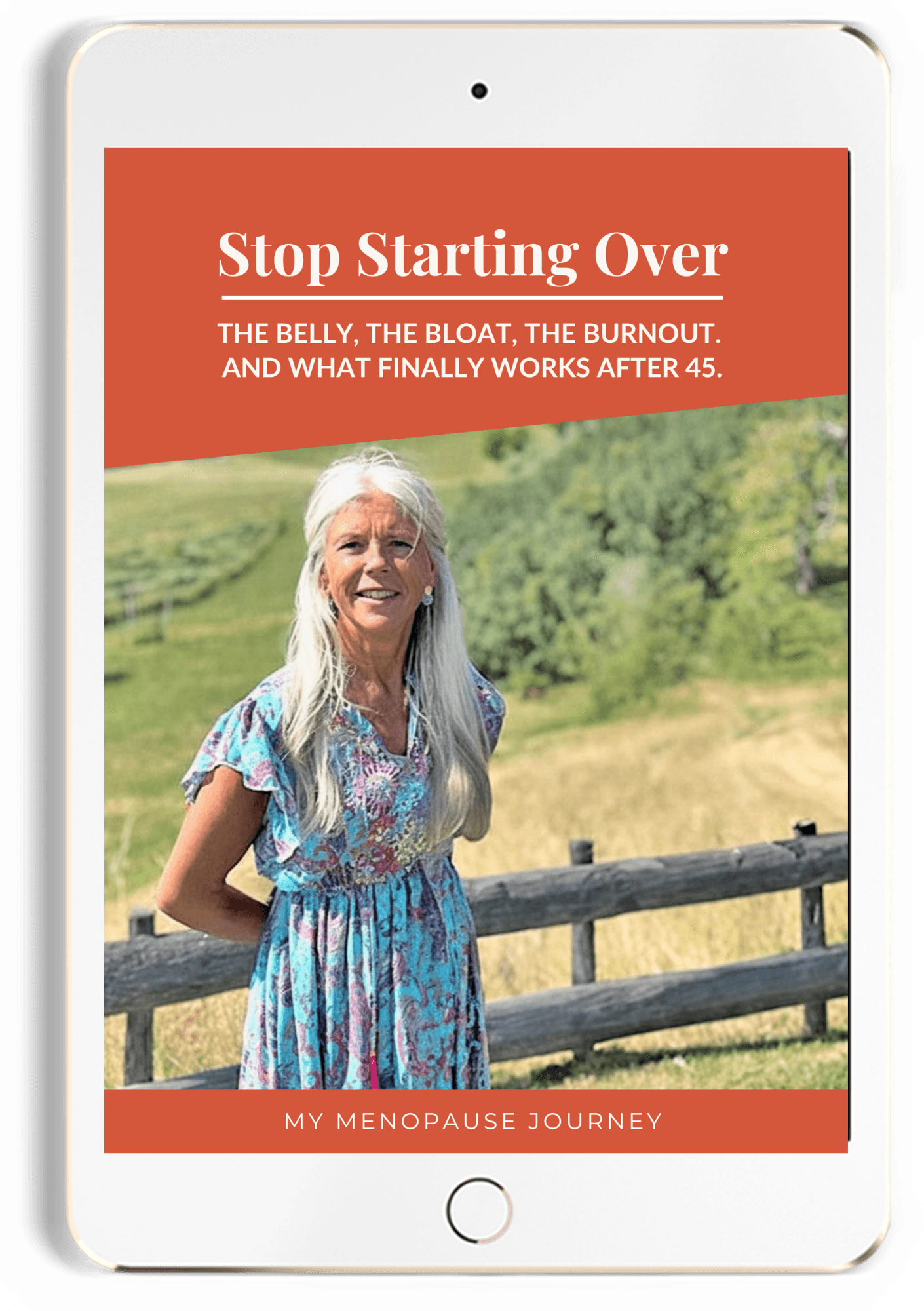
The belly · the bloat · the burnout
Same food. Same workout. A body that stopped listening.
The rules changed after 45 — and nobody handed you the new ones. Four guides that work with your hormones, not against them.
I’m done guessing →
$47 · founders’ price · instant download
Table of Contents
The Midlife Mindset Struggles No One Warned Us About
Aging isn’t all spa days and freedom. It comes with real emotional and mental hurdles, like:
- Feeling invisible or irrelevant: the world seems to value smooth skin and youth more than wisdom and lived experience.
- Losing identity: when the roles of mothering, career-building, or caregiving change, you might wonder who you are without them.
- The brain fog that makes you doubt yourself: when words won’t come and your memory feels patchy, it’s easy to spiral into “is something wrong with me?” Spoiler: it’s hormones, not you.
- Worrying about the future: health, finances, relationships, retirement — the “what ifs” can keep you up at night.
I’ve had those thoughts, too. They’re normal, yes — but they don’t get to be the whole story.
A mindset shift after 40 can help you see yourself through a new lens — one where your value is deeper than your appearance, and your possibilities are still wide open.
Remember: the goal isn’t to stop aging — but to embrace it with curiosity, grounded hope, and authenticity.
Why a Positive Mindset Matters More After 40
Midlife has a way of shaking the ground under your feet. And no, this isn’t being negative — it’s reality.
Society often worships youth, and suddenly, you’re wondering if anyone even notices you anymore. Oh, I still remember the moments I used to look around and think, “Did I just become invisible overnight?”
And yet, the truth is… your worth hasn’t gone anywhere. In fact, it’s bigger than ever.
And no, I’m not saying this just to make you feel better. The science actually backs it up. Your brain keeps rewiring itself well into your 60s, 70s, and beyond — that’s neuroplasticity (a fancy word for “your brain is still learning and changing”). New thoughts, new habits, new joy — they really do build new pathways.
That means you can shift your thinking, even after 40, and create a mindset that supports joy, strength, and emotional wellness.
In other words, aging isn’t the end of growth. It’s just a different kind of blossoming.
And that’s why a positive mindset matters more after 40. It unlocks real, daily continual growth, inner peace, and the ability to embrace the second half of life with purpose and optimism.
Because it’s not about resisting aging — it’s about flourishing through it.
Your Brain and Your Gut Are Talking — and It Changes Everything
Here’s something I wish someone had told me sooner: your gut isn’t just where digestion happens. It’s like a second brain. There’s a constant phone line running between your gut and your head — scientists call it the gut-brain axis — and what you put in your tummy actually shapes how calm, clear, or anxious you feel.
And in menopause? That phone line gets a bit fuzzy. As estrogen drops, the balance of bacteria in your gut shifts too. That can mean more bloating, more food cravings, lower mood, foggier thinking — all the things we tend to blame on “just hormones.”
The good news: you can do something about it. And it’s not complicated.
What I’ve learned over the years is this — when I feed my gut well, my mind goes quieter. When my mind is quieter, I feel calmer. And when I feel calmer, positivity comes naturally. It’s not magic. It’s biology being kind to me when I’m kind to it.
Small things that help:
- Fermented foods every day — yogurt, kefir, sauerkraut, kimchi. A spoonful is plenty.
- Real plants on your plate — fiber from veggies, beans, fruits, and seeds feeds the friendly bacteria.
- A little less sugar and processed stuff — they make the wrong bacteria happy.
- Probiotics if you need them — sometimes a nudge helps.
Recent research backs this up — the gut-brain axis really does shift in menopause, and supporting it with food and lifestyle can ease mood, sleep, and even hot flashes. (Want a plain-English overview? Cleveland Clinic has a friendly read on the gut-brain connection.)
So when I tell you a positive mindset starts within, I mean it literally. It often starts in your gut.
The Benefits of a Positive Mindset for Aging Women
If at this point, you’re still wondering: “Why bother with all this mindset talk?”
I say, because it works — in ways you can actually feel.
We’re talking about:
- More resilience: life still throws curveballs, but with a positive mindset, you recover faster when you believe you can handle them.
- Healthier aging: women who hold onto an optimistic outlook tend to have lower stress, stronger immune function, and even longer lifespans. (Your body really does notice when your mind is lighter!)
- Better relationships: when you practice self-compassion, it ripples out into your connections with others. You’re easier on yourself — and that makes you easier on the people you love.
The best part? A positive mindset doesn’t erase challenges. It simply gives you the tools to move through them with more grace and less fear.
5 Gentle Shifts That Changed Everything for Me
Here’s what helped me move from just getting through the day to actually enjoying this stage of life:
1. Gratitude in the small things
I started writing down three things I was thankful for before bed. Some nights, it was deep — health, family, the slow miracle of waking up another day. Other nights, it was honestly “the dog next door didn’t bark me awake at 3 a.m.” Either way, it pulled my focus toward something good.
2. Affirmations for a positive midlife mindset
These positive affirmations for aging women helped me rewrite the way I saw myself:
- “I’ve earned every line on my face — they’re proof of a life fully lived.”
- “Each year adds more depth, strength, and beauty to who I am.”
- “I release the need to look perfect — I choose to feel free instead.”
- “I am not running out of time. I am arriving in my time.”
- “My worth is not behind me — it’s with me, right now.”
- “I choose curiosity over fear, and wisdom over regret.”
- “Aging isn’t shrinking me; it’s expanding me.”
3. Seeing aging as an opening
Instead of mourning what I’d lost, I started asking, “What can I say yes to now?” It made me realize how liberating midlife is.
4. Choosing my people carefully
I surrounded myself with people who lifted me up — and quietly stepped back from those who didn’t. This one choice made me lighter. And truly, genuinely happier.
5. Turning down the noise
I stopped following social media accounts that made me feel “less” and filled my world with voices that celebrated real women aging well. My mood changed almost overnight.
And honestly — a sixth one I’d add now: taking care of my gut. It took me years to connect the dots, but when my tummy is calm, my head is calm. It’s that simple, and that powerful. (See above — the gut-brain bit is the piece I wish I’d known in my forties.)
Real Women, Real Stories
A dear friend of mine, Maria, hit 55 feeling completely lost. She told me, “I looked in the mirror and didn’t recognize the woman staring back. I wasn’t unhappy exactly — I just felt… gone.”
Instead of spiraling, she made one small change: she started taking daily walks, no matter the weather.
At first, it was just for exercise. But she realized the walks gave her space to breathe, think, and notice her own strength returning.
One afternoon she said to me, “It’s funny — I thought I was too old to start over. But out there, step by step, I found myself again. And I realized I’m not done — not even close.”
And me? I won’t even pretend I never have hard days. But the difference now is, I don’t get stuck in them. At 60+, I laugh more, I stress less, and I feel freer than I ever did in my forties.
So, what narratives are we rewriting here?
Think of these as the three cornerstones of a positive mindset for aging women:
- From perfectionism → authenticity: you don’t need to prove anything. You just need to be you.
- From fear → curiosity: instead of worrying about “what if,” wonder about “what next.”
- From regret → wisdom: your past isn’t a burden — it’s your badge of honor.
So tonight, before bed, try one doable thing. Maybe write down three gratitude statements. Or say one affirmation that feels true to you. Tomorrow, notice how it shifts your energy.
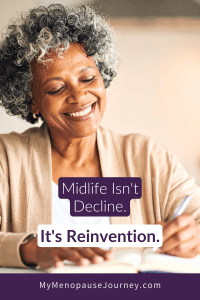
Keep in mind: midlife isn’t a crisis. It’s a reinvention.
And the best part?
You get to write this chapter your way.
References:
Optimism and physical health: a meta-analytic review – APA PsycNet (psycnet.apa.org)
Positive psychological well-being and cardiovascular disease – PubMed Central (pmc.ncbi.nlm.nih.gov)
Optimism linked to longevity and well-being – National Institute on Aging (nia.nih.gov)
The new science of optimism and longevity – MIT Press Reader (thereader.mitpress.mit.edu)
Optimism as a means to a longer life – Stanford Center on Longevity (longevity.stanford.edu)
Gut-brain communication in menopause: neuroendocrine and microbiome interactions – PubMed (pubmed.ncbi.nlm.nih.gov)
The gut-brain connection – Cleveland Clinic (my.clevelandclinic.org)

Written by Gita — Certified Fasting Therapist, Nutrition Coach and Keto Coach, and founder of My Menopause Journey since 2014. Every article is built on published research and trusted health sources, updated regularly, and shaped by her own journey through menopause. Read more about Gita and her credentials.