I know. Chia seeds don’t exactly scream “life-changing.”
They’re small. Gelatinous. And if we’re being honest, you probably bought a bag once, used it twice, and forgot it existed.
But some of the most quietly effective habits in midlife? They’re the simple ones you can actually stick to — and chia is one of them. So here’s the honest case for chia benefits for women: what this tiny seed does, and how to use it right.
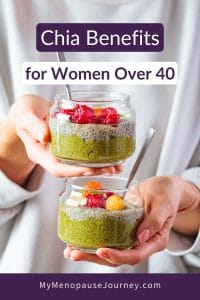
Table of Contents
Why Chia Benefits for Women Hit Different in Midlife
Let’s talk about what your body is asking for now (even if it’s not saying it out loud):
- More stable energy
- Better digestion
- Less “random” hunger or cravings
That’s exactly what chia supports. With its fiber content (a lot of it), omega-3 fatty acids, and minerals — magnesium, phosphorus, iron, zinc, and a surprising amount of calcium (handy when midlife bones want backup) — chia helps your body feel more regulated. It’s one of a whole little family of helpers, too — see the full seeds for menopause lineup, including its lignan-rich sibling flax.
Chia Seeds Benefits for Digestion and Energy
If your digestion has gone unpredictable since midlife arrived — you’re in very good company. Hormonal shifts can mess with your gut motility, fluid retention (hello, bloating), and bowel habits.
Good thing chia is genuinely good for your gut, by:
- Supporting bowel regularity
- Feeding good gut bacteria
- Helping things move without being harsh
Think of chia as a gentle nudge, not a laxative.
Chia also helps steady blood sugar, thanks to its fiber-and-fat combo. So instead of energy spikes, you get slow, steady fuel — the kind where you don’t crash mid-afternoon, and you don’t need sugar or caffeine to “push through.” That’s the kind of energy your body prefers now.
What About Chia’s Omega-3s?
You’ll see chia sold hard on its omega-3s, and it does have plenty. One honest catch worth knowing: chia’s omega-3 is ALA, the plant form, and your body only converts a small slice of it into the active forms (EPA and DHA) it really uses. That doesn’t make chia pointless — ALA has its own perks, and the fiber and minerals stand on their own. Just think of chia as a lovely complement to oily fish or an algae-oil supplement, not a swap for them.
How to Use Chia (Without Making It Weird)
Let’s keep this realistic — you don’t need Pinterest-level recipes. Simple ways to use chia seeds:
- Add to overnight oats
- Stir into yogurt
- Make a quick chia pudding
- Sprinkle into smoothies
That’s it. No overthinking required. Want a few hacks? Coming right up.
Chia Hacks You’ll Actually Find Useful
Hack #1: Think “hydration + fiber,” not just fiber. Chia drinks up water, so pair it with enough fluid — otherwise it can backfire (constipation instead of relief).
Hack #2: Use it to manage cravings, not restrict food. Add chia to meals, not as a replacement. It helps you feel full without feeling deprived.
Hack #3: Evening chia = better mornings. A little chia at night can support smoother digestion the next day. Subtle, but it works.
Hack #4: Never eat chia dry. This one matters. Dry chia hits liquid and swells fast — there’s a documented ER case of dry chia seeds expanding and blocking a man’s esophagus. Always soak it first; even 10–15 minutes does the trick.
Chia Seeds Side Effects (Let’s Be Honest About It)
Yes — even the tiniest things come with a learning curve. Chia side effects can include:
- Bloating (especially at first)
- Gas, if you add too much too quickly
The fix is simple: start with 1 tablespoon, build up gradually, and drink enough water. Nothing serious — your gut just needs time to adjust.
One nice bonus for the histamine-sensitive among us: chia is generally considered low-histamine and well-tolerated, so it’s an easy seed to start with if richer, aged foods tend to set you off.
So… Are Chia Seeds Worth It?
They’re not dramatic. They won’t change your life overnight. But chia benefits can help you feel more stable, more regular, and more in control of your energy. And sometimes, tiny additions with big results are exactly what your body’s been asking for.
If it’s the midsection that’s been bugging you… Chia’s fullness trick is one small piece of a bigger picture. Grab my free guide — How I Got My Waist Back: Quick Fixes for Women Over 50 — for the simple shifts that actually moved the needle for me.
References:
Chia seed benefits: what you need to know – Harvard Health Publishing (www.health.harvard.edu)
Chia seeds – Harvard T.H. Chan School of Public Health (nutritionsource.hsph.harvard.edu)
Chia seeds pack a nutritional punch – Mayo Clinic Health System (www.mayoclinichealthsystem.org)
Benefits of chia seeds – Cleveland Clinic (health.clevelandclinic.org)
Esophageal impaction with chia seeds – American College of Gastroenterology (gi.org)
The science behind the use of chia seeds (Salvia hispanica) – PMC (pmc.ncbi.nlm.nih.gov)

Written by Gita — Certified Fasting Therapist, Nutrition Coach and Keto Coach, and founder of My Menopause Journey since 2014. Every article is built on published research and trusted health sources, updated regularly, and shaped by her own journey through menopause. Read more about Gita and her credentials.